
Nonfiction
FALL 2026Processional
by MIKE FREEMAN
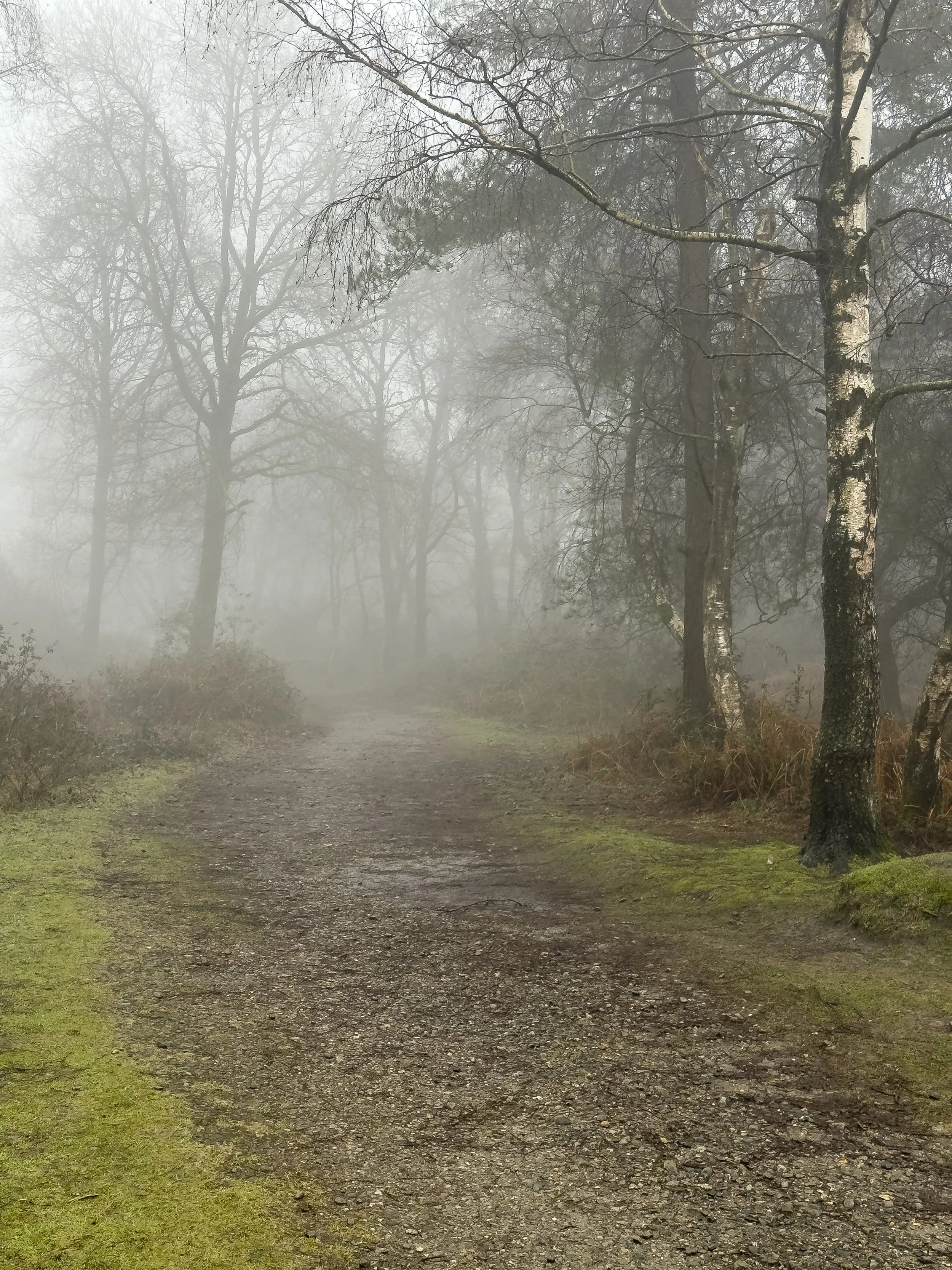
Spring is noteworthy to varied thrushes—they're among the first arrivals—but autumn is when they define themselves. If that's not true it's an easy mistake to make at the start of November, when rains have swollen Southeast Alaska's streams and darkness crowds its days. Bears swell too, larded with fish, berries, and moose calves, trudging along the spawning grounds where the last coho lilt above their nests, called redds. The banks are covered with rotting leaves and spackled with the milk-sop residue of what they sustain—salmon flesh, molded berries, mushroom ferment, bear dung. Heavy rains run much of this together, leaching it into dark, mossy ground. November’s dead are April’s dowry. Plants and animals of every kind share in the rite, celebrating the process in their own time and way, and varied thrushes—gathering for migration—tap out its coda.
It’s ceremony, and when you honor life you honor death. In Southeast Alaska that means salmon. Everything packed between the mountains and ocean here owes its health to anadromous fish. In spring billions struggle from their egg sacks. In summer earlier generations return. They come back in skeins, great clouds, and everything frenzies. It begins in January with the tiny hooligan, followed by the sea-run rainbows all spring. Sockeye and chinook salmon come in late May, pinks and chums by August, and the last, coho, peak in September. Bears to mink to shrews, wolves, marten, and ravens too, fatten on the flesh, while the forests and berries sponge what ten thousand fish generations have left behind. Varied thrushes reap the insects and fruit it all sustains, and by the time they platoon for migration they’re at winter’s edge.
There's a deeply forested creek in Alaska, scarcely known, and one with which I'm intimate, having for many seasons walked it a few times a year working in the field for state fish biologists, counting salmon. By late June the season's first sockeye spawn here, and later some of the last coho. Even into early November you'll see some unspawned fish pairing in the riffles.
It's a dark place, this stream, with great, moss-laden spruce and hemlock grown along the banks. Even in summer, on rare clear days, only shafted cathedral light trickles through. Bygone glaciers, too, piled battered eskers up in places, providing a bit of elevation in the flat land. The spruce atop them tower. Riparian understories, bolstered by salmon rot, are a tangle of fern and devil's club, salmon berries and dewy mosses. Water’s-edge alders stretch over the current, pilfering what little direct light sneaks down. Mink hunt the creek's edges and marten its banks. If you sit long enough beneath the trees wolves will howl along nearby muskeg edges, and a wolverine may leave a track in the silt. Brown and black bears are always there, felt when not seen, a constant, respirating presence. While all these hunt other foods, everything's secondary when the salmon return.
It's a different place at that time, summer and fall. In the other months wildlife scatters. Bears brumate, and the mustelids and canines—while always drawn to water—range elsewhere. Bird numbers, too, are a pittance, the few remaining species mostly silent in the cold, dark days. In spring others return. Walk this creek in March and you’ll hear winter wrens wake the forest. A flock of crossbills may rotate through, and the ravens—aloof, muttering their many shaman tongues—are omnipresent. In the water you may glimpse a few fry tucked up under the banks, avoiding mink and kingfishers. There's not much else to notice. Come back in June, though, and there is. The devil's club fronds and leaves of blue and salmon berries obscure the banks. Rufus hummingbirds bounce from blossom to blossom, and a diversity of warblers liven the underbrush. Fox sparrow song rules the day, hermit thrush the twilight, while the smell of mingling pollen mixes with heavier moss scents. Eagles dot the overstory, and brown bears tromp the banks, each eager for the sockeye throngs.
When salmon leave freshwater they're a couple inches long. They spend two to five years cruising ocean currents before sexual maturation calls them home. Congregating at river mouths, they then rush inland, where they're pounded, slashed, torn, and netted, as salmon sharks, sea lions, seals, orcas, and humans have marked the time, staging themselves for the harvest. The survivors use tides to ride up estuaries, still subject to seals and people. They spend a couple days adjusting, then in bands of tens and thousands head upstream, resting at each tributary where they're still harried by humans and now river otters. Each fish knows the route. There's some mixing, but for the most part they end up in the creek that hatched them. The attrition is atrocious. Those who make the rivers swim through shallower and shallower water, becoming more vulnerable, since the eagles, bears, otters, and wolves have passed down the age-old map. Each, then, knows when the fish arrive, and to which creek.
All salmon are silver when they come in, stream-lined for speed and dexterity. For reasons linked to arousal they transform dramatically during their in-river lives. Sockeye, coho, and chinook turn mostly red. The males' backs hunch up and daunting teeth sprout from jaws of either sex. By the time they've reached my favorite haunt the sockeye are fully mature. They haven't been here since smolting years ago but they understand life and death now. Things mean to eat them and will, but enough of them, they know, must complete the ritual, and to that end low water is a pox. The eggs need the shallow, oxygenated riffles, and if the creek is too low eagles, bears, and everything else will gorge. The fish know this too. They gather in the pools, where the current makes its bends and downed logs have snagged on the corners, providing cover. Here they wait. Generations of claw marks mar the oldest snags, and leaves below the eagle perches are spattered with droppings where the birds keep vigil for any outliers in the shallows. The predators crowd to these spots as the fish themselves do, year after year. Sockeye ripen here, the reds becoming deeper as the females swell and the males harden. Still, they wait. It's rain that triggers them, any little bit. Knowing their vulnerability, they rush out with the high water, finding new partners when one fish then another gets picked off. They rout out a depression in the gravel, then collectively, somehow, lay down their next of kin. Close your eyes. If what's happening hits you just right the breath will leave your body.
About this time you hear the varied thrushes. If the sparrows, warblers, and hermit thrushes dominate the sunnier days, they leave the moments just after a rain to the varieds. They're called rain birds, the call sounding like a prolonged enunciation of the English word —‘raiaiaiaiaiaiain'. After a summer storm you'll hear them chorusing off one another in any spruce parcel. They're colored for pageantry, for carnival, with broken patterns of deep, rich blue and faded burnt orange painting body and face. Like all birds they breed, nest, and rear young throughout spring and summer, and when you hear them call after a rain it's likely the sockeye have moved out to spawn.
Varied thrushes know attrition too. Life is a marginal affair and they're no exception. It's not uncommon to see a dead juvenile shriveled in the mosses. First flight is a precarious time and pneumonia is a scourge to all young birds. As summer progresses, the year's crop dwindles, and a varied’s call can sound like lamentation if you let it. Both young and adults here thrive on the abundance of insects and berries, and salmon augment that fodder. The birds understand this, if not the purpose or the power that gives them life or what meaning it may have, then the sublime current pulsing through themselves and everything around them. It's this they honor, not by raising temples and shrines or composing great art as we do, but in their own ancient, deeply-crafted manner. You'll see this. It's not our language, it's not our expression, but the projection of ceremony is unmistakable.
Whatever summery tatters remain disappear here with the first magpie, a lone, long-tailed corvid fresh from the mountains. They scavenge salmon scraps on the stream banks and drum up other forage with the enviable ease of opportunists, and from there the descent into winter is precipitous. The coho pour into the river mouths from August to October, performing the same cat-and-mouse with water levels as sockeye. Rain is steady all fall though, and the fish usually spend less time ripening in the depths. Frosts arrive, and most bird life is gone. By early November, waterfowl are reduced to over-wintering mallards and bufflehead. The last columns of shorebirds, too, filed past the beach not long ago, and while a song sparrow remains here and there it's mostly left to the varied thrushes to close out the migrant season.
This is the odd time, the transitory time, when the frenetic glee of summer and fall passes into mostly moribund winter. Everything feels it. Bears, people, eagles, and others lap up what they can, anticipating the coming torpor. All fall migratory birds sensed it, leaving in great flocks toward perpetual summer. The moose have rutted and herd up now, both for the warmth of a crowd and to ward wolves off. This is when you'll see them, the thrushes, gathered by a score or more beneath the darkened spruce. Find this creek. Walk the bear trails up and sit a while. You might get lucky. If you do, it won't be the only ritual you'll notice. Nearby are the footfalls. Most of the way it's like any human trail—brown bears put their feet where they land, hitting a different patch of ground each time. This wears the path uniformly. For brief stretches though, up to a dozen bear strides, you see the patterns, where every bear that passes puts its feet in the same depression, leaving moss to grow between the steps. Generation after generation repeats this, and though they're scarce, every bear trail has them. They're like monuments to our own past —Stonehenge, say, or Easter Island; you don't know the people that made them or what exactly you're passing through, but you do know the presence of sacrament.
Look in the riffle now, there. Two cohos suspend themselves in the current. The male's a slab, the humped back a sheet of red and the gruesome kype hung with teeth. The female is darker, more demur. She turns on her side and lays in the nest they've routed, shimmering her body to move out more gravel. If you had the patience, if the cold didn't bother you, you'd see it, the male revolving over and around her, nuzzling her fins, tickling her sides, she occasionally doing the same to him. Everything would be familiar, warm, reminding you that love-making is a ritual too, one not unique to our kind. Then the time would come, when she'd dip her vent in the hollowed nest and let go, spilling out two thousand orange suns. He'd follow, gaping his mouth and clouding the water with milt. They've consummated their own private ceremony, and given their species a little more hope. The last thing to do is die.
The days are so dark now, the feeble sun little more than a bauble through the evergreens. Nearly everything that leaves has left, but in these dank confines you might catch the thrushes. They're leaving too, but there's a last rite. Across the creek a pair materializes, then several more. You'll both know and not know what you're looking at, only being certain that you're witnessing custom. Thrushes hop. They skip along for several bounds then halt. This is all you'll see, but it's what you feel that's important. On the ground, saturated with the drippings of another year, the dark, orange-banded birds hop beneath the boughs, a few dozen banded up and skipping in communion. Soon they'll leave. Someone makes a signal and the ones familiar with the journey show the year's young the way. When they arrive food will be there for them. When they return here the rot now below their feet will feed them and their new families. There's a cadence to their movements, a rhythm, and by the time they pass you won't understand what the practice means but you'll recognize in it the ordered grasping, the humble hope to reach what's just out of touch.
Winter follows. Months of scanty resident life. Sounds from the spruce, tracks in the snow. Raven calls and otter slides, mink prints, deep post holes from wandering moose. There are occasional flare ups of chatty crossbills, chickadees, siskins, but mostly silence.
Twilight comes. Take it home and follow it into the dark. We dream there. Let it be spring, when it's light. Go back to the creek now, up the bear trail. The devil's club is budding. Nip one off with your teeth. Enjoy the crunch of leaves, the running chlorophyll. Breathe. The blueberries have blossomed and a hummingbird darts among them. Varied thrushes are back too. The sun still struggles through the spruce but is stronger now, and a fox sparrow lights up the air. A coho gill plate lies translucent at your feet, and a sun ray warms your cheek. Follow it.
Walk out in the stream and lay on your back. The current will take you. Newly hatched coho fry fumble in the eddies, but the older ones, who've reared here for two years or more, know where they're going. Go out with them, to the estuary. Their bodies have changed, grown bigger, shifted from deep greens and dark purples to silver. It's smolting season. Float with them down the creek, under the log jams, past the high banks and washed-out roots. You're at a confluence now, then another. The main stem has a bluish tint from the bleeding mountain glacier miles away. You drift over the first returning sockeyes, still ocean-silver but morphing rapidly. They're going where you were. Smolt are beneath you now in shoals. The spruce are gone. Only willow and alder shade the banks here. Male snipe whirl overhead, making their wraith-like calls. The river bends when it hits the dunes. Brackish water now. Stop. Crawl out on the bank, up on the sand, then look. A pair of seals works the water just off a bar, searching for sockeye, and people—gill-netters—prepare their camps for the coming season. Out in the bay, where the bulk of fish still swirl, the sea lions, sharks, killer whales, and bay netters are right there with them as the season dictates.
Look above now, at the terns. The beach across the river is constellated with their eggs. The adults have been to the other end of the world and have returned now to feed their young on the little fish passing by. Tern culture, like all culture, is patterned on patterns. Sunlight gathers in streaks across the current and you watch as one bird then another breaks its jerky flight and plunges, trying for a smolt. It's happened. Sickle wings press down and lift off the water, a silver fish wriggling in an orange beak. Trace it. It arcs back and up, and for a moment you see every line, every detail, perfection, until everything is lost in the intersection, when your eyes blanch with the glare of water and the piercing sun and the shining ocean. It's all gone, then reappears, but different now. I don't know anything of this world, only that I never want to leave it.
Mike Freeman
Mike Freeman lives in Rhode Island. “Processional” is his second contribution to The Hopper and he’s authored two books, including the memoir Neither Mountain Nor River: Fathers, Sons, and an Unsettled Faith.
Quisque iaculis facilisis lacinia. Mauris euismod pellentesque tellus sit amet mollis.